

Bread Truck
a story by Joey Lucero published by Some People Press


Introduction
Since the summer of 2022, Harrell Fletcher and Laura Glazer have organized a weekly autobiographical writing and publishing workshop at the Columbia River Correctional Institution, a minimum-security prison for men in Northeast Portland, Oregon. It operates similarly to writing workshops in other contexts, where participants write during the week, read their work during class, and receive feedback. Fletcher and Glazer bring in writing materials, books for inspiration, and visitors, including Miranda July, Constance Debré, and Karleigh Frisbie Brogan, who give advice as professional writers, editors, and publishers.
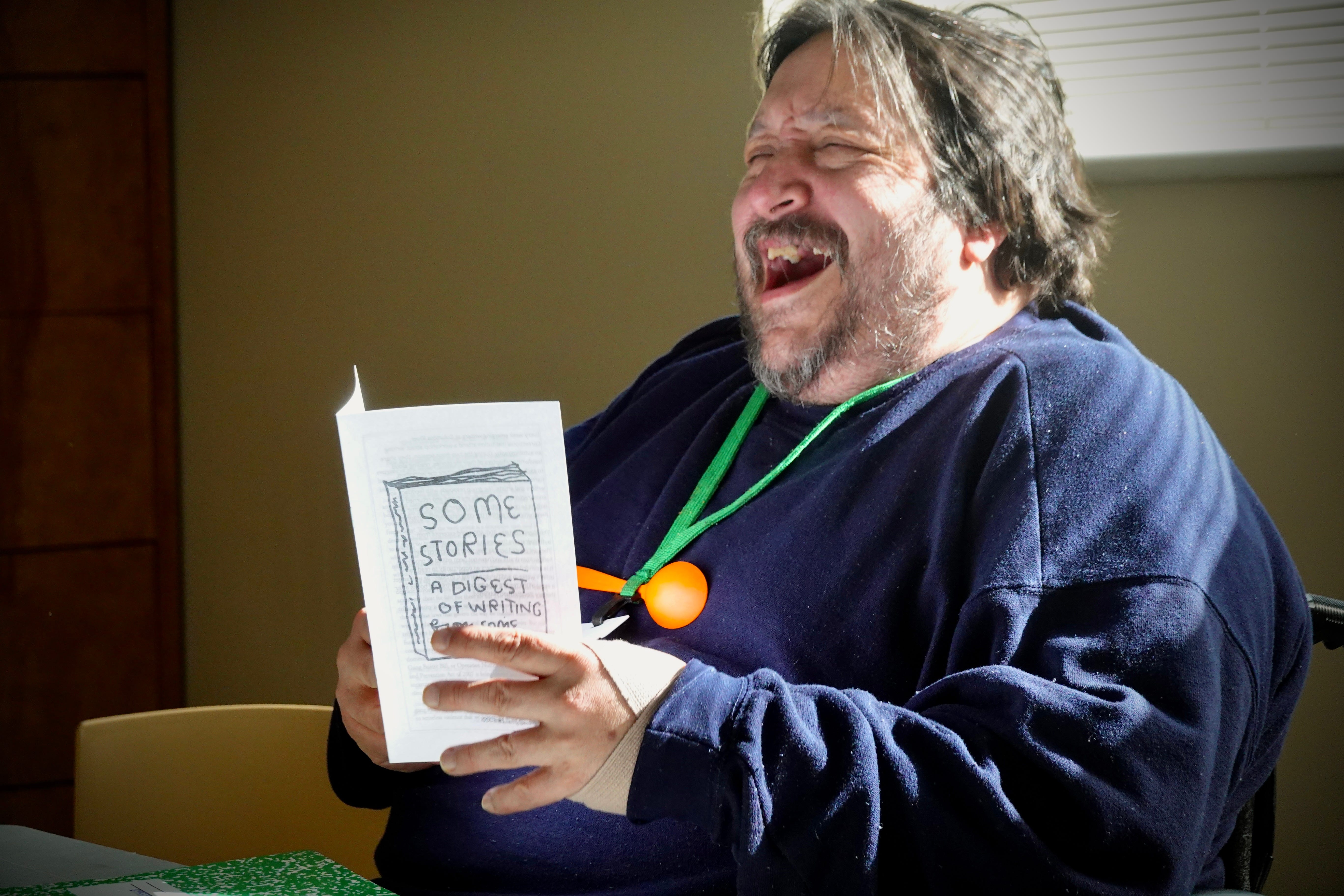
Worth It! is the third book in the Same Time series published Some People Press, an imprint created by Fletcher and Glazer to make the writing from the prison workshop available to the public. It was written by Joey Lucero, who joined the workshop about six months after it started and spent close to a year before his release writing his often hilarious autobiography. Lucero’s life has been filled with misadventures and his writing is remarkably revealing, humorous, and hopeful in the face of the challenges and tragedies that he has experienced.
Half of all profits go to the authors of the books and the rest helps fund Some People Press’ operational budget. To support the project please consider purchasing Some People Press books and becoming a paid subscriber to the SPP Substack.
Bread Truck
My mom had a problem with me and my girlfriend Claire living in her house in Southeast Portland, so I went out and purchased a 1971 International bread truck that had been converted into an RV. There was chicken wire holding in shelves that held live chickens and boxes of eggs. The guy I purchased the truck from lived on a farm and the truck looked like it had been in a barn for a while. It had no brakes, so I had to rig up the emergency brake with some old speaker cable that stretched when you used it. There was no driver’s seat, in its place was a plastic milk crate, a little bicycle mirror replaced a missing side mirror, and there was no doghouse to cover the motor—it was exposed from the inside. There was a five-gallon bucket of gas with a hose coming out of it going straight to the carburetor. All the doors had been welded shut, except one.
I paid the guy $200 and he handed me the title and keys for that thirty-foot-long beast of a truck. When I started it up, a series of hiccups and rattles came from the engine. A huge backfire and black smoke billowed from the exhaust. I don’t know how to drive stick, so I had to keep it in first gear all the way to my house—about twenty blocks away. I parked up the street, got into my yellow Ford Ranger, and drove over to my friends Ryan and Brian’s house.
When I walked down the sidewalk in front of their place, I noticed a pair of thick leather shoes that had been cut in half. Cutting them in half must have taken a lot of effort, I thought. Then I saw a pink ten-speed bicycle that had been twisted into a pretzel. I made my way through women’s jeans ripped to shreds and what looked like a life-sized Barbie’s Dreamhouse hit by a bomb. I found Ryan sitting on a pile of women’s clothes with a pair of wire cutters in his hand, struggling to cut through the neck of a turtleneck sweater. I told him, “Maybe a hacksaw would work better. I’ll hold one end, you hold the other, then we can saw down the middle.”
Tears were rolling down Ryan’s face as he chopped away. I mumbled, “You know she never really looked good in that thing anyway.”
He cried out, “Jenny left me!” then burst into tears.
I told him, “Don’t worry, brother, I got a bread truck! We’re dumping our old ladies, detailing the bread truck, driving to San Diego, and starting a band, whadaya say!”
Ryan smiled through his tears and said, “Really, brother?”
“I got the bread truck just up the street. All we have to do is make it to the car wash. Only thing is, I can’t drive stick.”
“I can drive stick!” Ryan said.
“Okay, let’s go!”
Mind you, Claire was standing next to me the whole time, but she was so high she didn’t know what planet she was on. I had to pull her down from climbing the tree in front of Ryan’s house before we all got in the truck and headed over to my house where the giant, half rusted, 1971 International bread truck sat, complete with boxes of eggs and chicken poop. You could smell the truck as we walked toward it, but when you opened the door the pungent smell of gas and rotten eggs was actually the least of our problems.
I told Ryan, “There are no brakes. I rigged the emergency brake and it kind of stretches when you pull on it too hard, so be careful.”
Sitting on the milk crate that was there instead of a driver’s seat, he turned the key and the series of hiccups began. Pumping the gas pedal, the truck started to shake and sputter, two loud backfires in a row sent thick, black smoke into the air. The motor was running. I gave Ryan the thumbs up, he gave me the thumbs up back.
Claire wanted to go in the bread truck, but I told her it wasn’t a good idea so we got in my Ranger. I pulled up behind Ryan and we began to coast down the hill toward the White Stag. We made a right turn at the bottom of the 52nd Avenue where the bread truck sent out two more backfires. It was really shaking—visibly rocking back and forth. When the giant truck reached the top of the hill, it stalled. I heard an explosion and saw smoke coming out the window on the side. When I looked over, I noticed Ryan was holding his hand up with the emergency brake handle in it. I could hear the gears grinding and the clutch exploding echoes across the street.
The bread truck began to roll back down the hill in reverse. I swerved, just missing it before it rolled over a parked car like it was nothing. Then Ryan smashed over another parked car that flipped the truck up on two wheels and rolled over a fire hydrant that blasted it with water. After taking out a cyclone fence and someone’s front porch, the bread truck came to rest at the foot of a pine tree. Two chickens and a plume of feathers flew out, and through the smoke and feathers, Ryan sprang out the side door.
52nd Avenue looked like a war zone—wrecked cars, water from the fire hydrant shooting into the air, and chickens running in every direction. The neighbors were out in the street. They had Ryan by the arm and were yelling, “Call the police!”
I pulled up in my truck, got out, and yelled back, “He’s infected with leprosy! Get off him!”
The man holding Ryan grimaced and let go of his arm. I grabbed him and said, “Come on, brother, let’s go.”
“Infected with leprosy?” he asked, amused.
“It was the only thing I could think of.”
We jumped into my truck, drove home, and parked in the garage. The police came to the door and said they believed my truck was involved in an accident.
My mom opened the garage door and said, “My truck has been in this garage all day. Sorry, it must have been someone else.”
They said, “Is Joey here?”
“No, he’s not here. Do you want me to give him a message when he comes home?”
“Nah, don’t worry about it. Have a good night.”
And I never saw the bread truck again.
 | A guest post by
|
Another fine piece of writing thanks to Harrell Fletcher and Laura two of the most decent human beings I have ever met it's been a pleasure working with them and I hope they publish more of my writings in the future..
Bought the book immediately.